


Curriculum
Curriculum
Chestnut Park Primary School is committed to developing a love of learning through a curriculum in which children are inspired, excited and challenged. If the children enjoy their learning experiences, they will want to engage in these learning experiences again and again.
Dream- Achieve- Inspire
Our philosophy is simple; if children enjoy learning, they will set themselves aspirational goals or dreams. Within an exciting, challenging and creative environment, children will achieve these goals whilst inspiring each other and driving their learning forward. Our ‘Dream-Achieve-Inspire’ philosophy towards the curriculum creates this community of learning.
Our Chestnut Park Primary School Curriculum
At Chestnut Park Primary School, we use an interdisciplinary approach to learning based on using skills and knowledge from across the curriculum. We combine International Primary Curriculum Units together to ensure full coverage of a broad and balanced Curriculum. It is a comprehensive curriculum with a clear process of learning and with specific learning goals for every subject, for personal learning and for international mindedness. As we combine units to the children’ interests and needs, we ensure full and deep coverage of the National Curriculum. National Curriculum Coverage is detailed within the attached links.
Approach to our Curriculum
 | The GLF Curriculum is an interdisciplinary, retrieval based curriculum which is designed to enable knowledge through a continuous spiral based approach that revisists key language and ensures reteival is taught explicitly. This is based upon the National Curriculum for Art, DT, Geography and History and Science has been adopted by all GLF schools. | ||
|
|
| ||
 | Mathematics learning follows the NCETM spines. More information can be found at the bottom of the page. Maths lessons apply a Concrete, Pictorial, Abstract methodology in which Mathematical concepts and procedures are taught through the use of physical objects and pictorial representations, alongside abstract equations. To develop our children’s thinking and reasoning skills, a discursive approach is strongly encouraged with the emphasis placed on the importance of children explaining their ideas and observations. Problem solving and reasoning activities are a key part of every lesson and children are always supported by a wide range of resources. We also use Mastering Number to support basic skills through 15 minute sessions daily in EYFS and KS1. Number Sense Times Tables Fluency is used across KS2 to develop and maintain multiplication and division fluency. It begins in Year 3, continues throughout Year 4, is revisited for consolidation in Year 5, and is used weekly in Year 6. Corbett Maths 5 a Day supports mathematical fluency and retrieval practice. It is used in Year 3 to consolidate Key Stage 1 learning and throughout Year 6 to support SATs preparation, recall and confidence. | ||
|
| Phonics - We use the synthetic phonics programme Read Write Inc. This is a very structured system which allows teachers to accurately and confidently assess pupils' phonic awareness at each stage of their learning. Whilst it is rigorous, it is also fun. Children learn new sounds with Fred the Frog and learn to read with their peers at a stage appropriate level. Please see the phonics link for full details. | ||
 | We follow a whole-class approach to reading, using CUSP Reading to develop confident, fluent and enthusiastic readers. Our curriculum includes a wide range of high-quality fiction and non-fiction texts, alongside carefully selected extracts that expose children to rich vocabulary, different authors, and a variety of themes and ideas. Children develop their fluency, vocabulary, comprehension and wider reading skills while building a lifelong love of reading. | ||
 | Our computing curriculum, enhanced by the Raspberry Pi Foundation’s Computing curriculum, is designed to equip all pupils with the knowledge and skills needed to thrive in an increasingly digital world. Technology is changing the lives of us all on a global scale and through a high-quality computing education, we inspire and equip pupils to participate confidently in a rapidly evolving digital landscape. Computing skills and computational thinking enable children to become resilient, creative, and critical thinkers while developing the digital literacy needed for the future. Our curriculum encourages pupils to become creators rather than simply consumers of technology. Through programming, coding, and computer science, children develop problem-solving skills, logical thinking, and creativity. We also promote the safe, ethical, and responsible use of technology, ensuring pupils understand their role and responsibilities as digital citizens. | ||
 | At Chestnut Park Primary School we use THRIVE, an emotional well being and social skills development assessment programme, to personalise our PSHE to the needs of the children. This works in unison with the JIGSAW PSHE programme which we use to teach our wider PSHE lessons. PSHE lessons include a unit to ensure all children are taught the statutory requirements for RSE. The RSE policy can be viewed by clicking this link. Our full Safeguard Curriculum can be read by clicking here. More information can be found at the bottom of the page. | ||
 | Modern Foreign Languages (MFL) are based upon the teaching of Spanish linked to topic based learning and is developed specifically for Chestnut Park by Language Angels. Each KS2 class will have a Spanish lesson on a weekly basis. Taught through song and practical lessons children will begin to recognise and learn Spanish greetings, colours, days of the week and months of the year before building on to talking in full sentences. | ||
|
| Music is taught using Charanga - Please see the document at the bottom of the page for a sheme overview and to see how this is embedded in our curriculum. There are also documents specific to KS1 and KS2 to help you understand the content more clearly. The Scheme supports all the requirements of the national curriculum. The scheme provides an integrated, practical, exploratory and child-led approach to musical learning which our children really enjoy.The interrelated dimensions of music weave through the units to encourage the development and progression of musical skills as the learning progresses through listening and appraising, differing musical activities (including creating and exploring) and performing. | ||
 | RE is taught using the Surrey Agreed syllabus - Click here to find out more. Chesnut Park's RE curriculum takes into account the teachings and practices of a wide range of religions appropriate to the children in our school community. As well as discrete RE lessons in every year group, topics and festivals arise in assemblies and other opportunities across our curriculum. Through the use of real life artefacts, trips to local places of worship, inviting visitors/speakers into school from various faith groups, children develop their curiosity and are given lots of opportunities to ask questions. | ||
|
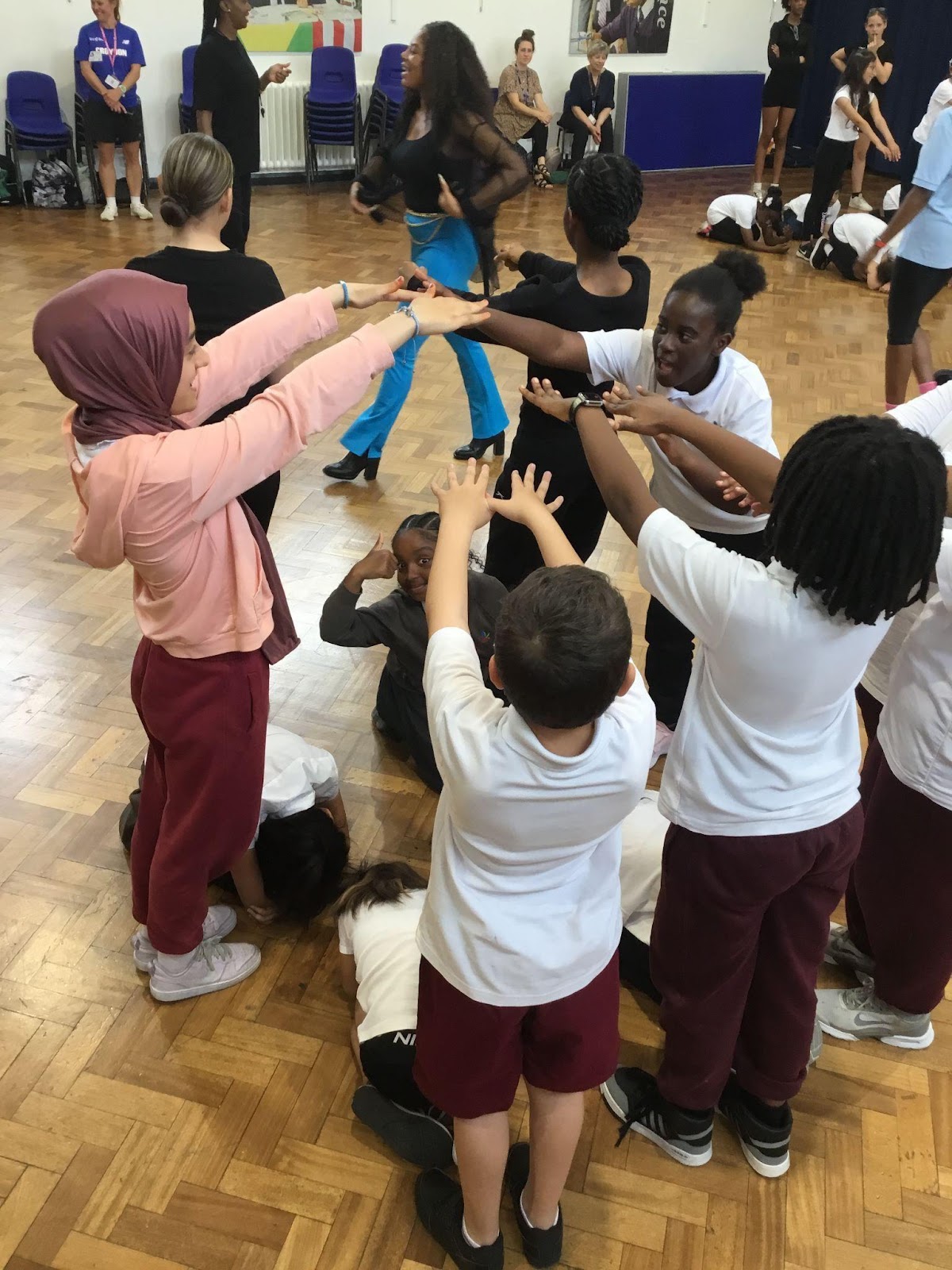
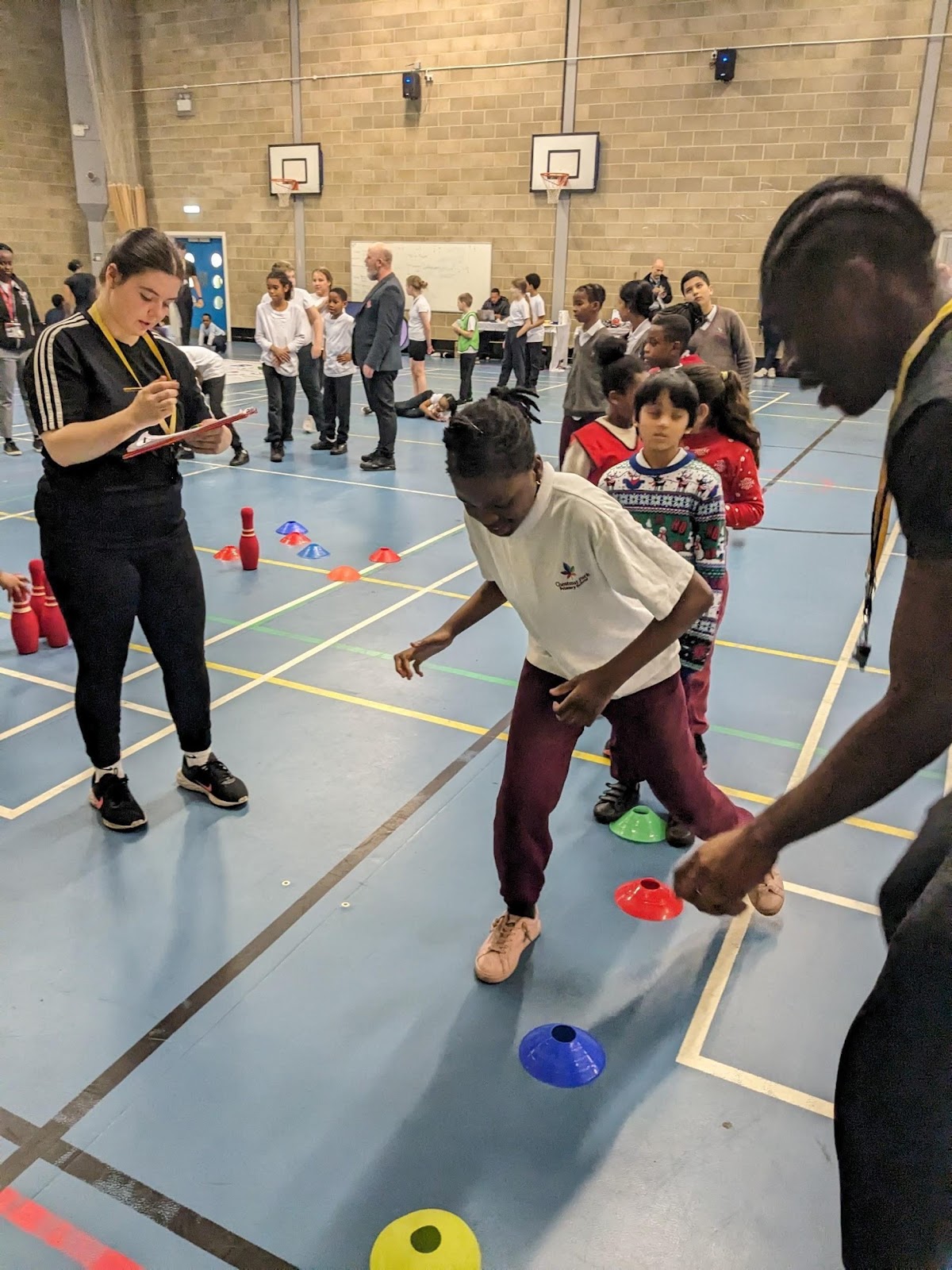
| PE is currently delivered using the Get Set 4 PE programme, which provides our children with a range of different sports (such as netball, hockey, tag rugby and tennis, dance, gymnastics and athletics). Chestnut Park has a specialist PE HLTA who focusses on the delivery of key skills across all Year groups. Each class in our school receives 2 hours of high quality PE each week, through sessions led at our new second site at Chestnut Park 2.0. Pupils in Year 3 will also have weekly swimming lessons for a term and a half at a local pool, where our goal is for all children to be able to confidently swim above National Curriculum expectations by the end of their time in Year 3. We also believe PE should be inclusive for all our pupils, so all of the lessons are adapted where required and we also take part in regular events within Croydon, such as the Panathlon, which are focussed for those pupils with SEND. We are also providing the children with more opportunities to compete in local festivals in a variety of sports, as well as providing opportunities for those in upper KS2 to compete against other local schools in leagues for both boys and girls football. By developing a positive attitude and an interest in a wide range of physical activities, it provides children with the skills they need to continue with their interests out of school as well. More information about how PE is implemented at Chestnut Park and across the Chalkland's cluster can be found below. |



If you have any queries about the school curriculum, please contact Mrs S Jones through the school office: enquiries@chestsnutparkschool.org